
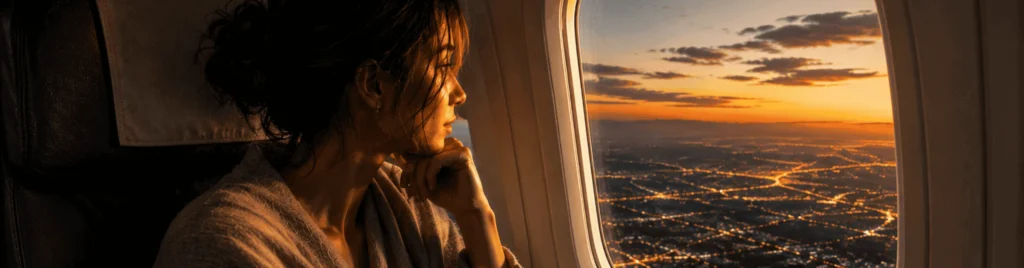
REFLECTION
Your life cannot keep flying without you.
A reflection on autopilot, routine, and the absolute rebellion of taking back control of yourself.
Autopilot was never created so that the pilot would disappear.
It was created to help them.
In the early years of aviation, keeping a plane steady during long flights required constant, exhausting focus. Autopilot emerged as a tool to ease that burden, maintain stability, and make the journey safer.
But one thing was completely clear: The pilot was still necessary.
The machine could handle a portion of the journey, but it could never replace the consciousness, direction, or responsibility of the person steering the aircraft.
The problem isn’t having an autopilot running. The problem is forgetting that we are still the pilots.
And perhaps that is one of the finest metaphors for modern life. Because we all need routines; we need order, we need habits, and we need structure. We require certain automated behaviors to help us get through the day.
That is where the danger creeps in. When you work, respond, produce, fulfill, pay, resolve, and reach the end of the day with the feeling that you did everything… except inhabit yourself.
When your life works, but it doesn’t breathe.
When your schedule is packed, but your presence is entirely absent.
When you say “all good” simply because explaining the truth would demand too much energy. When weeks, months, or years fly by, and a quiet part of you begins to ask in silence: “When are you coming back?”
We don’t always lose ourselves to chaos.
Sometimes we lose ourselves to routine.
By repeating the exact same things, avoiding heavy questions, normalizing exhaustion, and calling “peace” what is actually resignation. By confusing stability with living, and staying in places, connections, and old versions of ourselves that no longer represent who we are.
There are routines that support us, but there are also routines that hide us. And the dividing line is almost always marked by consciousness.
A conscious routine brings you order. An unconscious routine leaves you numb.
The first helps you build. The second helps you avoid feeling.
And there are far too many people living precisely like that: functioning beautifully on the outside, fading away on the inside. People who look strong, but only learned how to never stop. People who look stable, but live carrying deep silences. People who look responsible, but abandoned themselves a long time ago. People who show up for everyone else, except themselves.
True rebellion with a purpose begins right there. Not necessarily in quitting, breaking things, screaming, or changing everything overnight. It begins with something much smaller and far more difficult: stopping the lies you tell yourself.
Accepting that something is weighing you down. Recognizing that a conversation is long overdue. Admitting that a certain routine no longer serves you. Drawing a boundary. Saying sorry. Dropping an excuse. Looking at yourself without a mask on. Standing back at the helm.
Because taking back the helm doesn’t mean controlling everything. It means refusing to live as a passenger in a life that carries your name.
It means reclaiming your presence. It means asking yourself:
Does the life I am living right now still look like me?
Is this routine supporting me, or is it hiding me?
Does this stability give me genuine peace, or does it just protect me from the fear of change?
Am I constructing a real life, or am I simply managing a comfortable version of my own absence?
These are incredibly uncomfortable questions. But there is no awakening without discomfort. And there is no freedom without taking responsibility. Guilt sinks you down; responsibility hands you back the keys.
It isn’t about blaming yourself for everything that happened. It isn’t about denying your wounds, difficult chapters, or real pain. It is about understanding that, even though you didn’t choose many of your circumstances, you can choose exactly what you do with your life moving forward from this very point.
Your history might explain pieces of who you are. But it should never pilot your entire destiny.
Because if everything that hurt continues to decide for you, then your past isn’t a memory anymore. It is your master.
You were born to awaken. To love better. To speak with more truth. To build healthier relationships. To lead yourself with deeper awareness. To live with absolute presence. To stop betraying yourself in the dark.
You do not need to tear your entire life down to begin. But you do need to stop romanticizing the very things that are putting out your fire.
Sometimes the first true act of rebellion isn’t changing the world. It is reclaiming your voice. Your peace. Your direction. Your internal fire. Your proper seat. Because routine can certainly help you sustain the flight. But it can never decide where you are headed.
Your life doesn’t need you to be perfect. It needs you to be present. It needs you back at the helm. It needs you to remember something simple, yet brutal:
Your life cannot keep flying without you.