

SAFFRON
Saffron dosage: understanding responsible use | Beejoy
Saffron dosage can depend on the product, extract concentration, individual tolerance, and personal context. Therefore, rather than looking for a universal amount, it is best to understand how to read the label, what factors can alter the dosage, and when it is important to consult with a healthcare professional before using supplements.
In supplements, saffron is typically offered in small amounts because it is an active, concentrated botanical.
Clinical studies have evaluated various doses, from low levels of approximately 20–30 mg per day to higher amounts in specific contexts, with doses of 20 to 400 mg/day of pure saffron being tested.
However, a dose used in studies is not necessarily the appropriate dose for everyone. The most responsible approach to saffron is to start with product information, check if the extract is standardized, and consider medications, pregnancy, breastfeeding, medical conditions, or individual sensitivities.
How much saffron to take

Common reference in emotional well-being studies of standardized extract. Some formulas present it in a single daily dose; others split it into two doses (e.g., morning and afternoon).

There are supplements with higher doses divided into two servings. They are usually related to specific extracts or patents and should not be compared directly.
Several mood studies have used doses close to that range for several weeks. There are also supplements with higher doses divided into two servings. This type of dosage is usually related to specific extracts or patents and should not be directly compared with any saffron product, as concentration, extract type, and standardization can vary greatly from one formula to another.
As a general rule, many people find it more sensible to start with the dosage indicated on the label and avoid increasing the amount on their own.
Factors that can influence saffron dosage
The recommended dosage of saffron depends on more than just the number of milligrams. Two products may list similar amounts and yet not be equivalent if they use different extracts.

Format and concentration of the supplement
Saffron can be found as threads, powder, capsules, liquid extract, or standardized extract. In cooking, it is used in small, variable amounts. In supplements, however, the quantity is usually measured with greater precision.
A standardized extract allows for a better understanding of what is being taken because it can indicate characteristic saffron compounds, such as crocins, safranal, or other markers. This helps avoid one of the most common confusions: comparing milligrams without considering the actual potency of the product.

Individual tolerance
Some people feel fine with low doses; others may notice digestive discomfort, mild drowsiness, or initial sensitivity such as nausea, vomiting, headache, and, although rare, allergic reactions.
Therefore, a prudent way to take saffron is to observe how the body responds during the first few days and avoid increasing the dose without reason. If discomfort appears, the responsible action is to discontinue use and consult a professional.
Medications, medical conditions, and professional supervision
The dosage may also change for people taking medications or having medical conditions. This is especially important if taking blood thinners, mood medications, blood pressure treatments, glucose drugs, or any medication intended for continuous use.
Although some sources indicate that well-documented interactions are limited, that does not mean combining supplements with medications is always safe. The absence of complete information does not equal the absence of risk.

Cómo tomar azafrán: qué considerar antes de usarlo
Tomar azafrán de forma responsable empieza antes de la primera cápsula. Empieza con tres preguntas simples: qué producto tengo, qué cantidad aporta y si mi situación personal requiere orientación profesional.
Leer la etiqueta del producto
La etiqueta debería indicar la cantidad por porción, el tipo de extracto, la dosis sugerida y las advertencias. También conviene revisar si la dosis diaria corresponde a una cápsula, dos cápsulas o una cantidad medida en gotas.
Este punto es importante porque algunos productos muestran una cantidad por cápsula, pero recomiendan dos cápsulas al día. Otros usan dosis más bajas, pero con extractos estandarizados. No basta con mirar el frente del envase: la información relevante suele estar en el panel de “Supplement Facts” o información nutricional.
Evitar combinar suplementos sin orientación
Otro error frecuente es combinar azafrán con otros suplementos para ánimo, sueño, apetito o estrés sin revisar la fórmula completa. A veces dos productos distintos comparten ingredientes con efectos similares. Esto puede aumentar la probabilidad de molestias o hacer más difícil identificar qué ingrediente está causando una reacción.
Si el objetivo es construir una rutina de bienestar, conviene hacerlo con calma. Un suplemento a la vez, una dosis clara y una observación honesta suelen ser mejores que una mezcla improvisada.
No usar la dosis como sustituto de una recomendación profesional
Una dosis encontrada en internet no reemplaza una recomendación individual. Esto es especialmente importante cuando se busca azafrán para temas sensibles como estado de ánimo, ansiedad, apetito, sueño o síndrome premenstrual.
El azafrán puede formar parte de una rutina de bienestar, pero no debe usarse como sustituto de medicamentos, terapia, seguimiento médico o atención profesional cuando hay síntomas persistentes o intensos.
Saffron with food or on an empty stomach
Saffron can be taken with food or as indicated on the product label. Many people prefer taking supplements with meals because it can be gentler on the stomach, especially in the beginning.
If a formula recommends taking it in the morning, afternoon, or split into two doses, it is best to follow that instruction. For divided products, the goal is usually to maintain a more consistent intake throughout the day. For single-dose products, the priority may be convenience and consistency.
The most important thing is not to change the dosage to make up for missed doses. If you forget a dose, you should not double the next one without professional guidance or unless the label explicitly allows it.
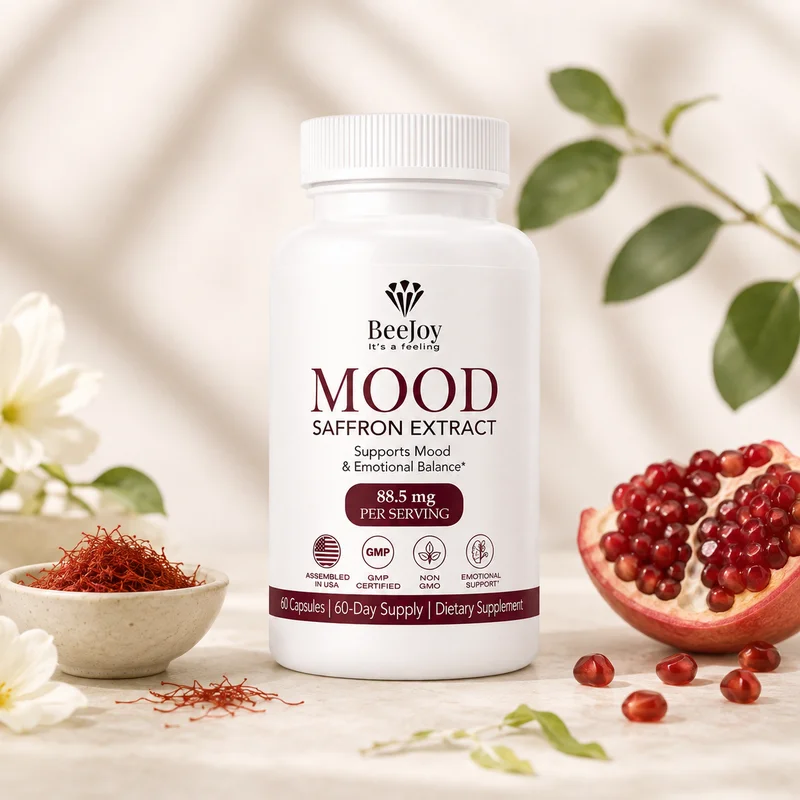
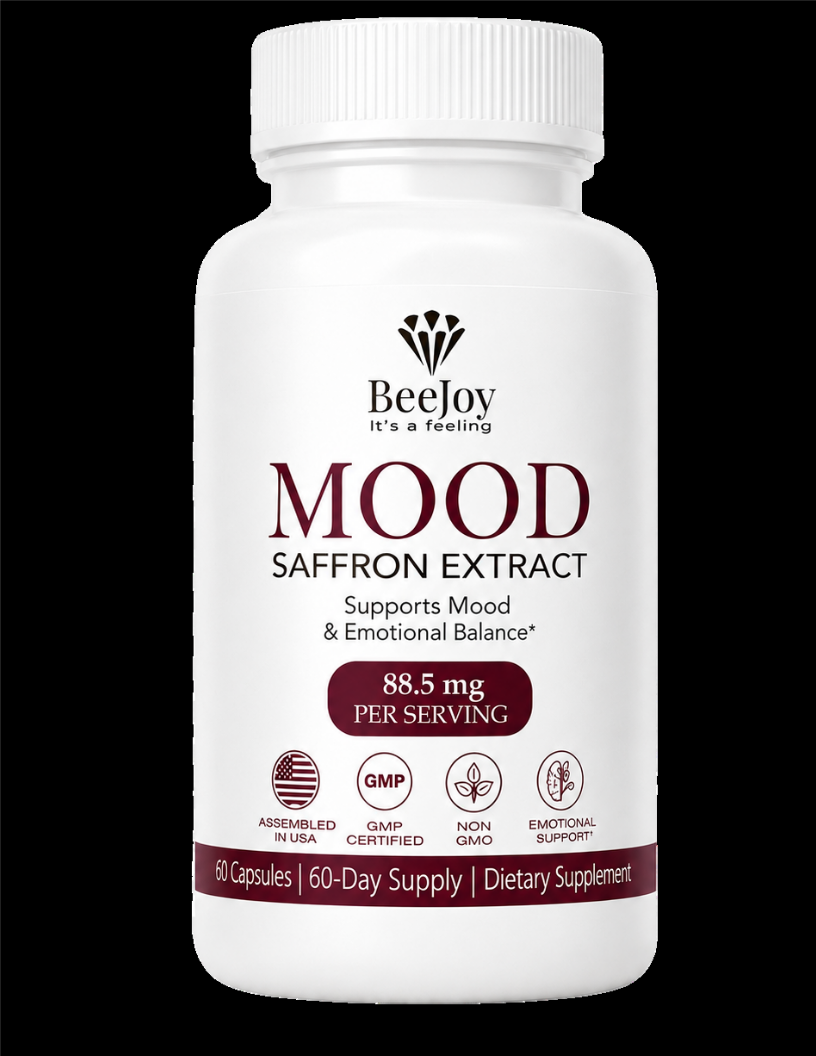
For an emotional well-being routine, BeeJoy Mood relates to this interest from a broader perspective: supporting daily habits that accompany how you feel, without turning a supplement into an absolute promise. BeeJoy — It’s a feeling.

Precautions before taking saffron
Saffron can be well tolerated in low doses, but it remains an active substance. For this reason, precautions are not a detail: they are an essential part of responsible use.
People taking medications
Those taking medications should consult a healthcare professional before using saffron supplements. This recommendation is especially important for blood thinners, antidepressants, anti-anxiety medications, blood pressure drugs, diabetes treatments, or any medication affecting the nervous, cardiovascular, or metabolic systems.

Pregnancy, breastfeeding, or medical conditions
During pregnancy and breastfeeding, caution should be even greater. Drugs.com recommends avoiding use during pregnancy and lactation, noting that amounts higher than those typically used in food may have uterine-stimulating effects.
People with bleeding disorders, a history of significant allergies, diagnosed medical conditions, or unevaluated symptoms should also consult a healthcare professional.
Signs of low tolerance or discomfort
Some signs of low tolerance may include nausea, digestive discomfort, headache, drowsiness, restlessness, or any unexpected reaction. If discomfort occurs, the most responsible action is to pause the supplement and review the situation with a professional.
Regarding safety, it is helpful to distinguish between standard supplement doses and extremely high doses.
Common mistakes when searching for saffron dosage
Searching for a dosage may seem simple, but frequent mistakes can lead to careless decisions.
Looking for a universal dosage for everyone
There is no single perfect dose for everyone. Age, sensitivity, medications, intended goal, extract type, and overall health status can change the recommendation.
Choosing a dosage solely based on goals like anxiety, weight, or appetite
Another mistake is picking a higher dosage hoping for faster results. Saffron should not be viewed as an immediate fix. In many studies, usage periods are measured in weeks, not hours.
Furthermore, goals related to anxiety, appetite, weight, or mood require a comprehensive approach involving daily habits and proper follow-up.
Ignoring medications or individual health conditions
This is the most critical mistake. A healthy individual taking no medications does not share the same context as someone receiving medical treatment, or who is pregnant, breastfeeding, or has bleeding disorders.

What to read next about saffron
If you are building a more comprehensive decision, you can continue exploring the saffron cluster without repeating information:
Main guide to saffron
→To understand what saffron is, its origin, and how it fits into an emotional well-being and balance routine.
Potential benefits of saffron
→To delve into mood, stress, satiety, rest, and premenstrual syndrome without exaggerated promises.
What saffron is used for
→To review common uses, key compounds like crocins and safranal, and the context of its daily use.
When to take saffron
Coming soonTo expand information on timing, times of day (morning or night), relationship with food, and consistency.
Precautions and possible side effects
Coming soonTo make clearer decisions regarding medication interactions, individual tolerance, and contraindications.
Frequently asked questions about saffron dosage
Clear and responsible answers to resolve your doubts before choosing or taking a supplement.
What is the recommended saffron dosage?
In supplements, a common reference in studies is around 28–90 mg per day of standardized extract. However, the dosage may vary depending on the product, concentration, format, and individual context.
How much saffron is typically taken?
Many formulas use small doses because saffron is concentrated. Some feature a single daily capsule; others split the dose into two servings. The most important thing is to follow the label and avoid comparing products solely by milligrams.
How to take saffron responsibly?
Read the label, verify the serving size, avoid combining it with other supplements without guidance, and consult a professional if you take medications or have a medical condition.
Should saffron be taken with food?
It can be taken with food or as indicated on the product label. Many people prefer taking it with meals to improve digestive tolerance.
Can I take saffron if I take medications?
If you take medications, consult a healthcare professional before using saffron supplements. This is especially important for blood thinners, mood, blood pressure, or glucose medications.
Does saffron replace prescription medications?
No. Saffron does not replace medications, therapy, or medical care. It can be part of a wellness routine, but it should not substitute a treatment prescribed by a healthcare provider.
What precautions should be considered before taking saffron?
Avoid using saffron supplements during pregnancy or breastfeeding unless medically indicated. Also consult if you have a medical condition, take medications, or notice discomfort when taking it.
This content is informational and does not replace professional medical advice. If you are pregnant, nursing, taking medication, or have a medical condition, consult your physician before using supplements.
Saffron dosage should not be understood as a one-size-fits-all number. Although many supplements work with small amounts, such as 28–90 mg per day of standardized extract, the appropriate dose can depend on the product type, concentration, individual tolerance, and personal context.
Therefore, before taking saffron, it is best to read the label, respect the indicated dosage, and avoid combining supplements without proper guidance. It is also important to consult a healthcare professional if you are pregnant, nursing, taking medications, or have a medical condition.
Saffron can be part of a conscious wellness routine, but its use must be clear, responsible, and accompanied by healthy habits. At BeeJoy, we believe wellness cannot be forced: it is built through simple choices, honest information, and daily care.